
PAPUA — The Ministry of Religious Affairs has emphasized that the resurrection of Christ carries a profound message of unity and social cohesion in Papua, particularly during the 2026 Easter celebration. The government views this religious momentum as an opportunity to reinforce harmony among communities in the region.
Acting Head of the Regional Office of the Ministry of Religious Affairs in Papua stated that the meaning of Christ’s resurrection extends beyond spiritual reflection. According to him, it serves as a call for all people to strengthen solidarity, promote compassion, and foster peaceful coexistence across diverse groups.
He explained that Papua, which is known for its cultural and religious diversity, requires continuous efforts to maintain unity. Therefore, the Easter celebration is not only a religious observance but also a social moment that encourages collective awareness of mutual respect and shared responsibility.
Furthermore, the Ministry highlighted that the values embedded in Easter—such as love, sacrifice, and renewal—are highly relevant in addressing social challenges. These principles are expected to inspire communities to move forward together while maintaining tolerance and understanding among different religious and ethnic groups.
In addition, the official noted that the resurrection of Christ symbolizes hope and transformation. This message, he said, should encourage individuals and communities to build stronger relationships and avoid divisions that could disrupt social harmony.
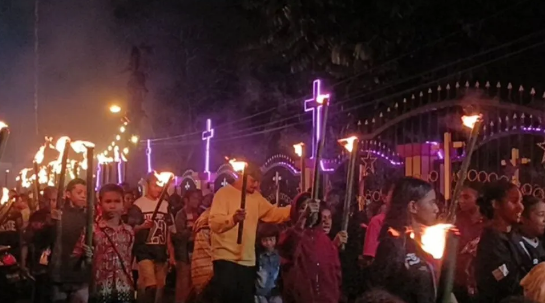
The Easter period in Papua is traditionally marked by various religious and community activities. These include worship services, processions, and social gatherings that involve large numbers of participants. Such events not only strengthen faith but also enhance interaction among residents from different backgrounds.
At the same time, the Ministry called on religious leaders and community figures to play an active role in spreading messages of peace. Their involvement is considered essential in ensuring that the values of Easter are translated into concrete actions within society.
Moreover, the government stressed the importance of collaboration between religious institutions and local authorities. This partnership aims to create a conducive environment where diversity is embraced and conflicts can be prevented through dialogue and mutual understanding.
The Ministry also underlined that maintaining unity in Papua is a shared responsibility. While religious celebrations provide momentum, long-term harmony depends on consistent efforts from all elements of society, including youth, community organizations, and local leaders.
In this context, the Easter message is seen as a reminder that unity must be nurtured continuously. The resurrection of Christ is interpreted as a symbol of renewal that encourages people to leave behind divisions and work toward a more inclusive and peaceful society.
Meanwhile, public enthusiasm during Easter celebrations reflects the strong role of religion in shaping social values in Papua. The active participation of communities demonstrates a collective commitment to maintaining harmony despite differences.
The Ministry further noted that Papua’s social fabric has been strengthened by traditions of mutual cooperation and respect. These local values align closely with the teachings highlighted during Easter, making the celebration particularly meaningful in the region.
In conclusion, the Ministry of Religious Affairs reaffirmed that the resurrection of Christ should be understood as a unifying force. By embracing the values of love, solidarity, and renewal, communities in Papua are expected to continue building a peaceful and harmonious environment.
The government hopes that this message will not only resonate during the Easter period but also influence everyday interactions among citizens. Through sustained efforts, unity in Papua can be preserved and strengthened for the future.