

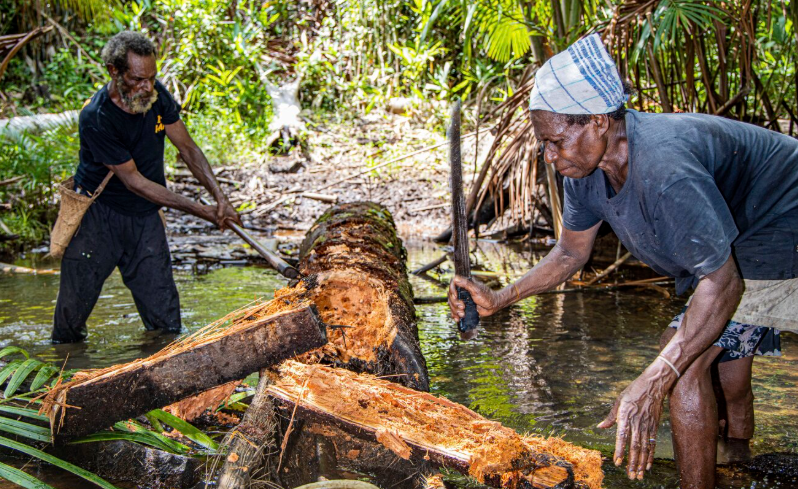
Checkpapuanow.com – An environmental advocacy group has raised serious concerns over extensive deforestation in Central Papua, where forest loss has now reached an estimated 27,000 hectares. The organization has called for immediate government action to prevent further environmental damage and to protect the rights of indigenous communities.
The deforestation is largely driven by the expansion of mining, palm oil plantations, and infrastructure development. According to the group, such large-scale activities have been accelerating since the creation of new autonomous regions in the area. While these initiatives aim to support economic growth, environmentalists warn that they are endangering one of Indonesia’s most vital ecosystems.
Forests in Papua are known for their rich biodiversity and serve as a critical carbon sink. Their destruction not only threatens endangered species but also contributes to climate change. The organization highlighted that current land-use practices, including the government’s food estate program, are clearing vast tracts of forestland, releasing large volumes of greenhouse gases.
Indigenous communities have also been severely impacted. For generations, local Papuans have depended on the forest for food, medicine, and cultural practices. Many now feel excluded from decisions that directly affect their ancestral lands. Activists argue that the lack of transparent consultation processes has fueled mistrust and social unrest.
The organization is urging authorities to immediately review and possibly revoke permits granted to companies operating in environmentally sensitive areas. They also recommend enforcing stricter environmental safeguards, including mandatory impact assessments and community engagement before project approval.
Furthermore, they call on the government to prioritize sustainable development strategies that balance ecological protection with economic progress. Without concrete steps, they warn, the ecological damage could become irreversible.
The group emphasized the importance of protecting Papua’s forests, not only for the environment but also for the cultural survival of its indigenous people. They stressed that meaningful cooperation between stakeholders—including the government, civil society, and local communities—is essential to achieving sustainable land management.
While the government has previously stated its commitment to environmental protection, critics argue that enforcement remains weak, and economic interests continue to take precedence. The current deforestation crisis in Central Papua is seen as a test of the country’s environmental governance.
As forest loss continues at a rapid pace, pressure is mounting on officials to act swiftly. Environmentalists believe that failure to protect Papua’s remaining forests could have long-term consequences, not only for Indonesia but for global efforts to combat climate change and biodiversity loss.
In the face of these challenges, experts stress the urgency of adopting an inclusive and transparent approach to development. Only through comprehensive planning and accountability can Central Papua’s forests—and the communities that depend on them—be preserved for future generations.